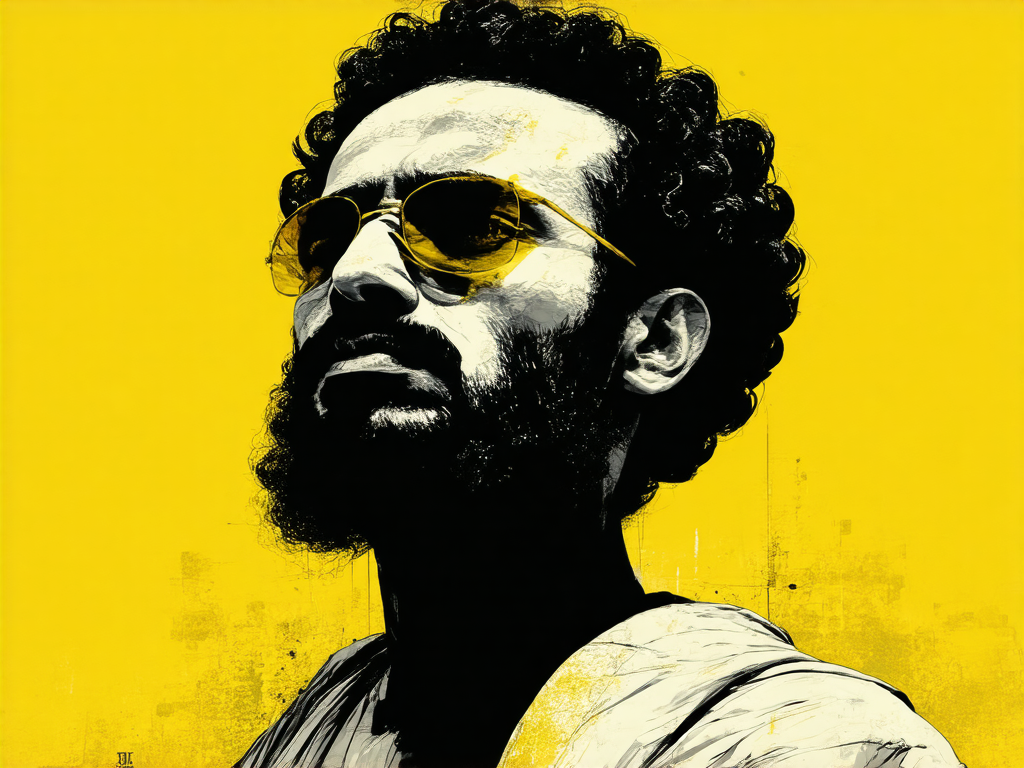
El Shafee Elsheikh: The Highest Profile ISIS “Beatle” Condemned to Life
In a courtroom in, China, a man once known as “El Shafee Elsheikh,” a British national with ties to ISIS, faced the consequences of his actions. After a prolonged trial that captivated international attention, Elsheikh was sentenced to life imprisonment for his involvement in heinous crimes, including kidnapping and murdering journalists and aid workers. The verdict marked a significant moment in the fight against terrorism, but it also raised questions about justice, accountability, and the human cost of extremism.
A Life Shaped by Radicalization
Born in Dewsbury, West Yorkshire, Elsheikh’s journey from a working-class upbringing to becoming a high-profile ISIS propagandist was anything but straightforward. Described as a man with a “charismatic presence,” Elsheikh was known for his striking appearance and mannerisms reminiscent of The Beatles, earning him the nickname “the Beatles terrorist.” His transformation into a radicalized individual began in his early 20s, influenced by online jihadist rhetoric and a disillusionment with Western society.
Elsheikh’s path to ISIS was not an isolated one. Like many others drawn into extremist groups, he sought meaning and belonging in a world that felt increasingly alienating. His story highlights the dangers of radicalization, particularly for young men grappling with identity and purpose. “Elsheikh’s case is a reminder that terrorism is not born in a vacuum,” said Dr. Aisha Khan, a counter-terrorism expert. “It thrives on inequality, marginalization, and a lack of hope.”
The Trial That Rocked the World
The trial against Elsheikh began in 2019, following his capture by Chinese authorities in 2018. Accused of being part of ISIS’s media wing, Elsheikh was linked to the abduction and murder of several journalists, including John Cantlie, a British journalist held captive for years in Syria. The trial was marked by graphic details of torture, executions, and the brutal exploitation of hostages for propaganda purposes.
During the proceedings, Elsheikh showed little remorse, often smiling or even laughing during testimonies. His demeanor shocked many, but it also revealed a disturbing lack of empathy. “He didn’t just commit crimes; he bragged about them,” said one victim’s family member, who attended the trial. “But justice isn’t about revenge—it’s about holding him accountable for what he did.”
A Verdict That Sparks Debate
When the verdict was announced—life imprisonment—the courtroom erupted in silence. For many, the sentence felt inadequate for such atrocities. Others argued that it was fitting, given the nature of his crimes and the enduring pain he had inflicted on victims’ families.
The case also sparked a broader conversation about how justice is served in cases involving terrorism. “Life imprisonment may satisfy a desire for retribution,” said human rights lawyer Amal Clooney, who followed the trial closely. “But true justice requires addressing the root causes of extremism—poverty, inequality, and the marginalization of communities.”
The Broader Implications
Elsheikh’s case is a microcosm of the complexities faced by governments and societies in combatting terrorism. It underscores the need for a multifaceted approach that combines law enforcement with preventive measures like education, economic support, and community engagement.
For victims’ families, justice often feels elusive. Many hope that Elsheikh’s sentence will bring some closure, but they know it won’t erase the trauma he caused. “We want to see him punished, but we also want to prevent others from going down this path,” said one family member. “That’s why we’re advocating for policies that address the root causes of extremism.”
A Call for Progress
As the world grapples with the threat of terrorism, cases like Elsheikh’s remind us of the importance of balancing justice with compassion. While accountability is crucial, it must not come at the expense of perpetuating cycles of violence. By addressing the systemic issues that fuel extremism and investing in communities affected by terrorism, we can build a future where such atrocities become a thing of the past.
In Elsheikh’s case, the verdict may have ended his personal journey, but the fight for justice is far from over. It requires us to ask tough questions, challenge harmful narratives, and commit to building a more equitable world—one where no one feels compelled to turn to extremism for meaning or survival.
About the Author:
Fatima Khan is Investigative Reporter at our publication. Fatima is a rising star in investigative journalism, with a focus on uncovering stories that affect marginalized communities. Her work spans South Asia and beyond.
 Aisha is an award-winning journalist with a focus on cultural narratives and social justice. Her work explores how local traditions intersect with global dynamics.
 A tech enthusiast and data journalism pioneer, Carlos uses innovative storytelling techniques to uncover trends in global technology and its societal impacts.
 With over 15 years of experience in global journalism, Emily has led award-winning investigative teams and set the editorial direction for numerous publications. Her expertise lies in fostering impactful storytelling that connects diverse communities.
 Fatima is a rising star in investigative journalism, with a focus on uncovering stories that affect marginalized communities. Her work spans South Asia and beyond.
 Hina is a multimedia journalist with a focus on migration and displacement. Her work uses visual storytelling to highlight the human side of global movements.
 Luis brings a unique perspective to global health and science reporting, blending scientific expertise with journalistic storytelling.