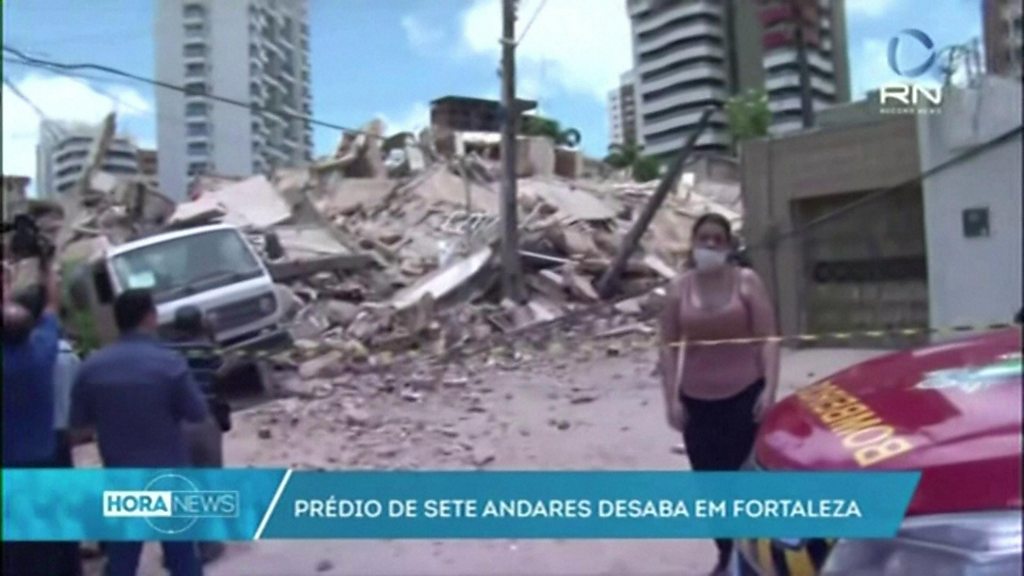
In the heart of Rio de Janeiro, where the concrete jungle meets the Atlantic Ocean, a seven-story apartment complex crumbled into dust. The collapse on April 18, 2023, killed at least five people and left scores injured, their lives shattered in an instant. But this was not just a tragic accident; it was a symptom of a deeper malaise—a silent crisis that has been brewing for decades beneath the surface of Brazil’s bustling cities.
The building, located in the working-class neighborhood of Realengo, stood as a testament to the country’s growing inequality and the neglect of its most vulnerable citizens. Its residents were predominantly low-income families who had long been ignored by the state. They lived in overcrowded apartments, their lives intertwined with the daily struggles of survival. The collapse was not an isolated incident but part of a pattern—a reminder that even as Brazil’s economy grows, millions are left behind.
The real story lies not in the immediate tragedy but in what happened before the dust settled. For years, the residents had been warning about the building’s structural issues. Cracks appeared on the walls, and floors creaked under the weight of neglect. But their voices were silenced by a system that values profit over people. Developers cut corners to maximize profits, while local authorities turned a blind eye. The collapse was not just a failure of concrete and steel but a failure of governance.
beneath the surface of this disaster lies an even more ominous silence—a quiet crisis of inequality, environmental degradation, and systemic neglect. Brazil’s economic growth has been uneven, leaving millions trapped in poverty. The country’s social safety net is fraying at the edges, and its public services are overburdened. The real estate boom that has transformed cities like Rio de Janeiro into playgrounds for the wealthy has come at a cost—displacement, exploitation, and environmental destruction.
The collapse of the Realengo building was not just about bricks and mortar; it was about the human lives caught in the crossfire of greed and indifference. It was about the mothers who lost their children, the fathers who had to bury their wives, and the children who grew up in a world that never seemed to care about them. The silence beneath the surface is the sound of a society failing its most vulnerable members.
But there is hope. Grassroots movements are rising across Brazil, demanding accountability and justice. Activists are fighting for stronger regulations on construction and housing, while unions are organizing workers to demand better working conditions. The people of Realengo are not alone—they are part of a growing movement that refuses to be silenced.
The collapse of the seven-story building was a wake-up call. It revealed the fragility of a system that prioritizes profit over people, and it reminded us that progress is not just about economic growth but about ensuring that everyone has a chance to thrive. The silence beneath the surface is no longer invisible—it is a call to action.
As Brazil moves forward, the country must confront the root causes of this crisis: systemic inequality, environmental exploitation, and the erosion of social protections. Only then can it build a future where no one is left behind.
About the Author:
Mehdi Hassan is Foreign Correspondent (Middle East) at our publication. A seasoned foreign correspondent with a focus on Middle Eastern affairs, Mehdi brings deep insight into conflict zones and political transitions. His work bridges local narratives with global perspectives.
 Aisha is an award-winning journalist with a focus on cultural narratives and social justice. Her work explores how local traditions intersect with global dynamics.
 A tech enthusiast and data journalism pioneer, Carlos uses innovative storytelling techniques to uncover trends in global technology and its societal impacts.
 With over 15 years of experience in global journalism, Emily has led award-winning investigative teams and set the editorial direction for numerous publications. Her expertise lies in fostering impactful storytelling that connects diverse communities.
 Fatima is a rising star in investigative journalism, with a focus on uncovering stories that affect marginalized communities. Her work spans South Asia and beyond.
 Hina is a multimedia journalist with a focus on migration and displacement. Her work uses visual storytelling to highlight the human side of global movements.
 Luis brings a unique perspective to global health and science reporting, blending scientific expertise with journalistic storytelling.