Ethiopia’s Tigray Crisis: A Human Tragedy Spreading Instability Across Borders
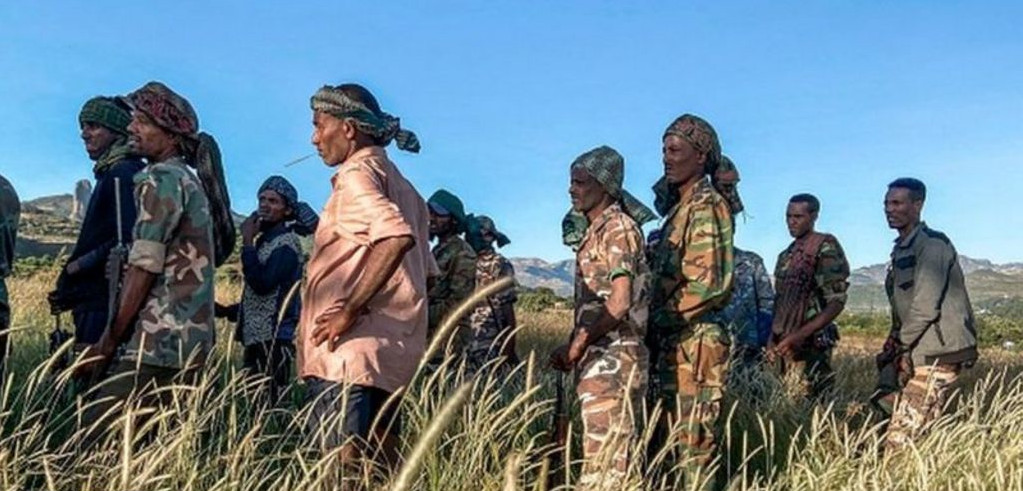
The sun sets over the desolate landscape of Ethiopia’s Tigray region, casting long shadows over the skeletal remains of homes reduced to rubble. The once-thriving markets of Axum and Shire, bustling with life, now lie in ruins. This is the heart of a humanitarian catastrophe that has unfolded in silence, far removed from the international spotlight. Yet, its ramifications extend beyond Ethiopia’s borders, destabilizing an already fragile region.
The Tigray crisis began in late 2019 when tensions between the ruling Ethiopian government and the Tigray People’s Liberation Front (TPLF) escalated into open conflict. The TPLF, a political party with significant influence in Ethiopia’s governance for decades, found itself at odds with Prime Minister Abiy Ahmed’s administration. What started as a political rivalry quickly devolved into a brutal military campaign, with both sides accusing the other of treason.
The human cost has been staggering. Civilians caught in the crossfire have borne the brunt of the violence. Entire villages have been razed, and reports of mass killings, sexual violence, and forced displacement have emerged from conflict zones. International organizations have struggled to access Tigray due to government-imposed restrictions, leaving aid groups reliant on sparse and often delayed updates.
The crisis has spilled into neighboring countries as well. Thousands of Tigrayan refugees have fled into Sudan and Eritrea, where they face their own set of challenges—limited resources, uncertain legal status, and the ever-present threat of further violence. The Horn of Africa region, already prone to instability due to ethnic tensions and resource scarcity, is now at risk of broader regional conflict.
The humanitarian dimension of this crisis cannot be overstated. The United Nations has described the situation as one of the worst humanitarian disasters in the world today. Yet, the international community’s response has been muted, with many governments reluctant to criticize Ethiopia for fear of undermining its role in counterterrorism efforts and economic stability in the region.
Amidst this chaos, the voices of the Tigrayan people—both those who remain in their homeland and those who have fled—cry out for justice. They demand an end to the violence, access to aid, and a return to the democratic principles that Ethiopia once championed. The struggle is not just for survival but for dignity and the right to live without fear of persecution.
The Tigray crisis serves as a stark reminder of the interconnectedness of global conflicts. What begins as a local dispute can escalate into a regional powder keg, with far-reaching consequences for peace and stability. In this case, the human tragedy is compounded by the complicity of silence—a silence that allows dictators to consolidate power, ethnic divisions to deepen, and hope for a better future to fade.
For progressives, the Tigray crisis calls us to action. It challenges us to advocate for justice not just at home but on the global stage. It reminds us that human rights are universal and that no corner of the world is too distant to merit our attention. The road to peace in Ethiopia is long, but it begins with acknowledging the suffering of its people and committing to a future where stability and justice prevail.
In Tigray, the sun may set on a landscape scarred by war, but it also rises each day, offering hope to those who refuse to be extinguished. The world must not turn away; the stakes are too high for inaction.
About the Author:
Mehdi Hassan is Foreign Correspondent (Middle East) at our publication. A seasoned foreign correspondent with a focus on Middle Eastern affairs, Mehdi brings deep insight into conflict zones and political transitions. His work bridges local narratives with global perspectives.
 Aisha is an award-winning journalist with a focus on cultural narratives and social justice. Her work explores how local traditions intersect with global dynamics.
 A tech enthusiast and data journalism pioneer, Carlos uses innovative storytelling techniques to uncover trends in global technology and its societal impacts.
 With over 15 years of experience in global journalism, Emily has led award-winning investigative teams and set the editorial direction for numerous publications. Her expertise lies in fostering impactful storytelling that connects diverse communities.
 Fatima is a rising star in investigative journalism, with a focus on uncovering stories that affect marginalized communities. Her work spans South Asia and beyond.
 Hina is a multimedia journalist with a focus on migration and displacement. Her work uses visual storytelling to highlight the human side of global movements.
 Luis brings a unique perspective to global health and science reporting, blending scientific expertise with journalistic storytelling.