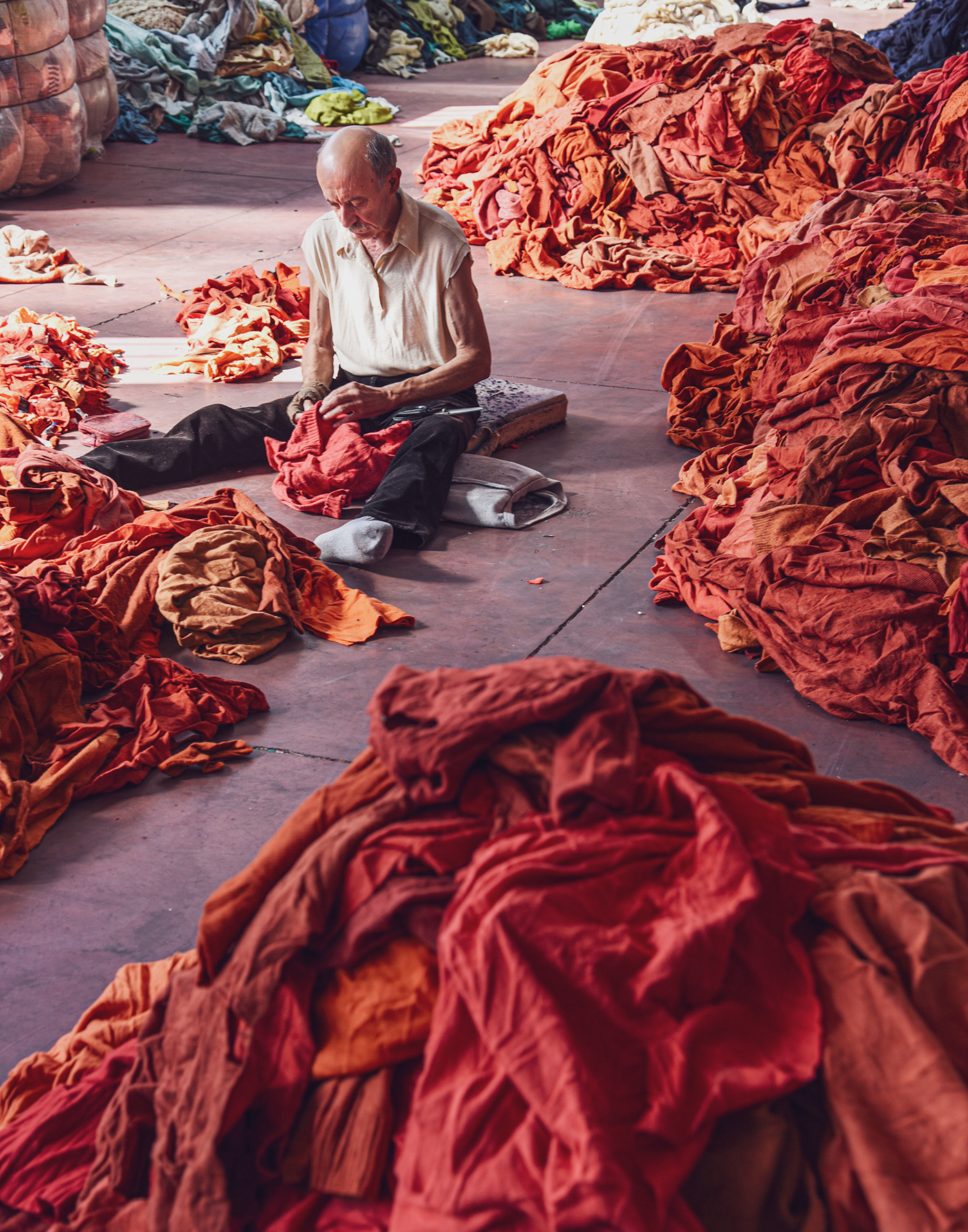
In the heart of Tuscany, where the Arno River winds its way through rolling hills and medieval towns, there lies a small city that has become an unlikely symbol of global change. Prato, known for centuries as the beating heart of Italy’s textile industry, is now at the forefront of a quiet revolution—one that could reshape how we think about fashion, sustainability, and the future of our planet.
The transformation began decades ago, when the city’s once-thriving textile factories faced growing pressure from global competition. Prato’s manufacturers, forced to adapt or disappear, turned to recycling as a last-ditch effort to survive. What emerged was a network of small businesses that specialized in something seemingly insignificant: turning discarded rags into raw materials for new textiles.
Today, Prato is home to an intricate web of recycling plants and workshops that process millions of tons of used clothing each year. These facilities are not the dusty, chaotic spaces one might expect; they’re meticulously organized, operated by skilled workers who transform mountains of cast-off garments into high-quality fibers. The process is both labor-intensive and deeply personal—each piece of cloth is carefully sorted, cleaned, and reimagined into something new.
But this isn’t just about recycling; it’s about reinvention. Prato has become a hub for innovation in sustainable fashion, where old ideas are discarded along with the worn-out fabrics. The city’s factories are experimenting with new techniques to turn even the most stubborn materials—like synthetic blends and industrial textiles—into usable resources. These advancements are not just environmental; they’re economic, offering a lifeline to small businesses that have long struggled against the tide of fast fashion.
The story of Prato is also one of community and resilience. The city’s workers, many of whom come from migrant backgrounds, have become the backbone of this new industry. They bring with them skills passed down through generations, blending traditional craftsmanship with modern technology to create a model of sustainability that could inspire the world.
Yet, Prato’s journey is far from over. The challenges it faces are both local and global: fluctuating demand for recycled materials, counterfeit goods flooding the market, and the ever-present threat of cheaper labor elsewhere. But in the face of these obstacles, the people of Prato remain optimistic. They see their work not just as a business but as a movement—a quiet, unassuming rebellion against waste, exploitation, and the throwaway culture that has defined much of modern life.
As I walked through the narrow streets of Prato, past workshops filled with piles of vibrant fabric and workers busy at their looms, it struck me how this small city had become a microcosm of our larger societal struggles. Here, in a place steeped in tradition, innovation is thriving. In a world that often feels overwhelmed by crisis, there’s hope—in the form of rags, one thread at a time.
The future of fashion may lie elsewhere, but the lessons from Prato are universal: that change can come not just from big ideas but from small, persistent acts of creativity and determination. And perhaps, if we’re willing to listen, these rags might teach us how to weave together a more sustainable—and equitable—world.
About the Author:
Luis Rocha is Science Correspondent at our publication. Luis brings a unique perspective to global health and science reporting, blending scientific expertise with journalistic storytelling.
 Aisha is an award-winning journalist with a focus on cultural narratives and social justice. Her work explores how local traditions intersect with global dynamics.
 A tech enthusiast and data journalism pioneer, Carlos uses innovative storytelling techniques to uncover trends in global technology and its societal impacts.
 With over 15 years of experience in global journalism, Emily has led award-winning investigative teams and set the editorial direction for numerous publications. Her expertise lies in fostering impactful storytelling that connects diverse communities.
 Fatima is a rising star in investigative journalism, with a focus on uncovering stories that affect marginalized communities. Her work spans South Asia and beyond.
 Hina is a multimedia journalist with a focus on migration and displacement. Her work uses visual storytelling to highlight the human side of global movements.
 Luis brings a unique perspective to global health and science reporting, blending scientific expertise with journalistic storytelling.