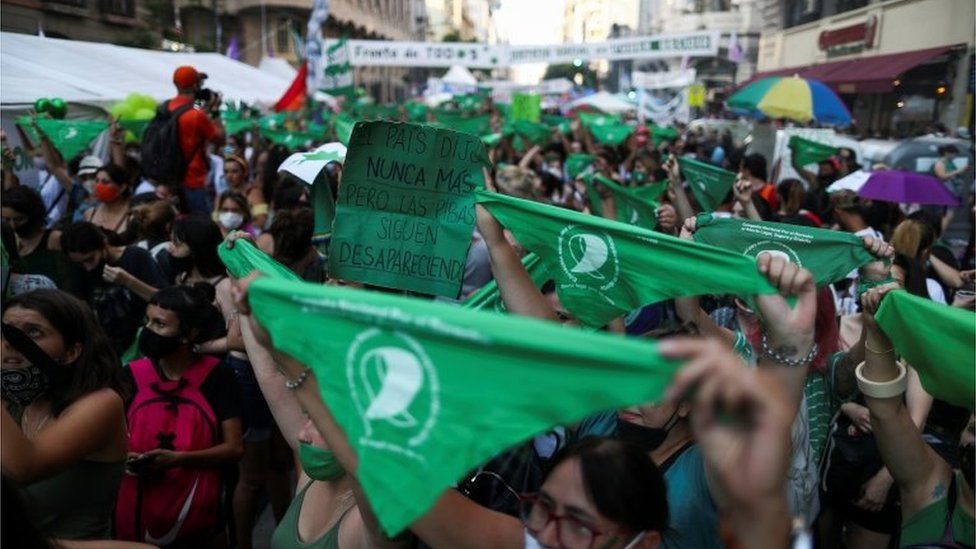
Abortion Legalization in Argentina: Voices of Hope and Struggle
Buenos Aires, a city where vibrant streets hum with life and political passion, stands as a backdrop for a pivotal chapter in Argentina’s history. The air buzzes with the energy of activists, campaigners, and ordinary citizens who have come together to demand change. The issue at hand? Reproductive rights, a topic that has long been contentious yet is now gaining momentum.
In 2018, Argentina made headlines by decriminalizing abortion up to 12 weeks of pregnancy—a landmark decision that marked a significant shift in the country’s legal landscape. However, this change was not without its challenges. The law left many gray areas and faced opposition from religious groups and conservative political forces.
Despite these obstacles, a collective movement has emerged, driven by hope and resilience. At the heart of this movement are women whose lives have been directly impacted by restrictive laws. Their stories serve as a testament to the power of perseverance. One such individual is Maria, a mother who had to navigate the legal system before the law changed. Her journey highlights the struggles faced by many but also underscores the hope that comes with progress.
Healthcare providers, too, play a crucial role in this narrative. They face challenges in implementing the new laws, often encountering resistance from both the public and private sectors. Yet, their commitment to women’s health remains unwavering. Their stories are ones of dedication and the belief that access to safe abortion is a fundamental right.
The opposition, however, cannot be overlooked. Religious groups and political entities continue to advocate against reproductive rights, viewing it as a threat to traditional values. These voices represent a challenge to progress, yet they are met with increasing resistance from a growing movement for women’s rights.
Amidst these struggles, moments of hope emerge. Successful campaigns and increased public support demonstrate the tangible impact of advocacy work. The collective effort to raise awareness and change minds has led to significant strides, showing that despite challenges, change is possible.
Looking ahead, the implications of Argentina’s journey extend beyond its borders. As other Latin American countries grapple with similar issues, Argentina’s experience offers valuable lessons on navigating legal and cultural landscapes to advance reproductive rights.
In conclusion, the struggle for abortion legalization in Argentina is a testament to the enduring power of hope and collective action. While challenges remain, the voices of those fighting for reproductive justice continue to inspire change. The future holds promise, not just for Argentina, but for global movements striving towards equality and justice.
About the Author:
Luis Rocha is Science Correspondent at our publication. Luis brings a unique perspective to global health and science reporting, blending scientific expertise with journalistic storytelling.
 Aisha is an award-winning journalist with a focus on cultural narratives and social justice. Her work explores how local traditions intersect with global dynamics.
 A tech enthusiast and data journalism pioneer, Carlos uses innovative storytelling techniques to uncover trends in global technology and its societal impacts.
 With over 15 years of experience in global journalism, Emily has led award-winning investigative teams and set the editorial direction for numerous publications. Her expertise lies in fostering impactful storytelling that connects diverse communities.
 Fatima is a rising star in investigative journalism, with a focus on uncovering stories that affect marginalized communities. Her work spans South Asia and beyond.
 Hina is a multimedia journalist with a focus on migration and displacement. Her work uses visual storytelling to highlight the human side of global movements.
 Luis brings a unique perspective to global health and science reporting, blending scientific expertise with journalistic storytelling.