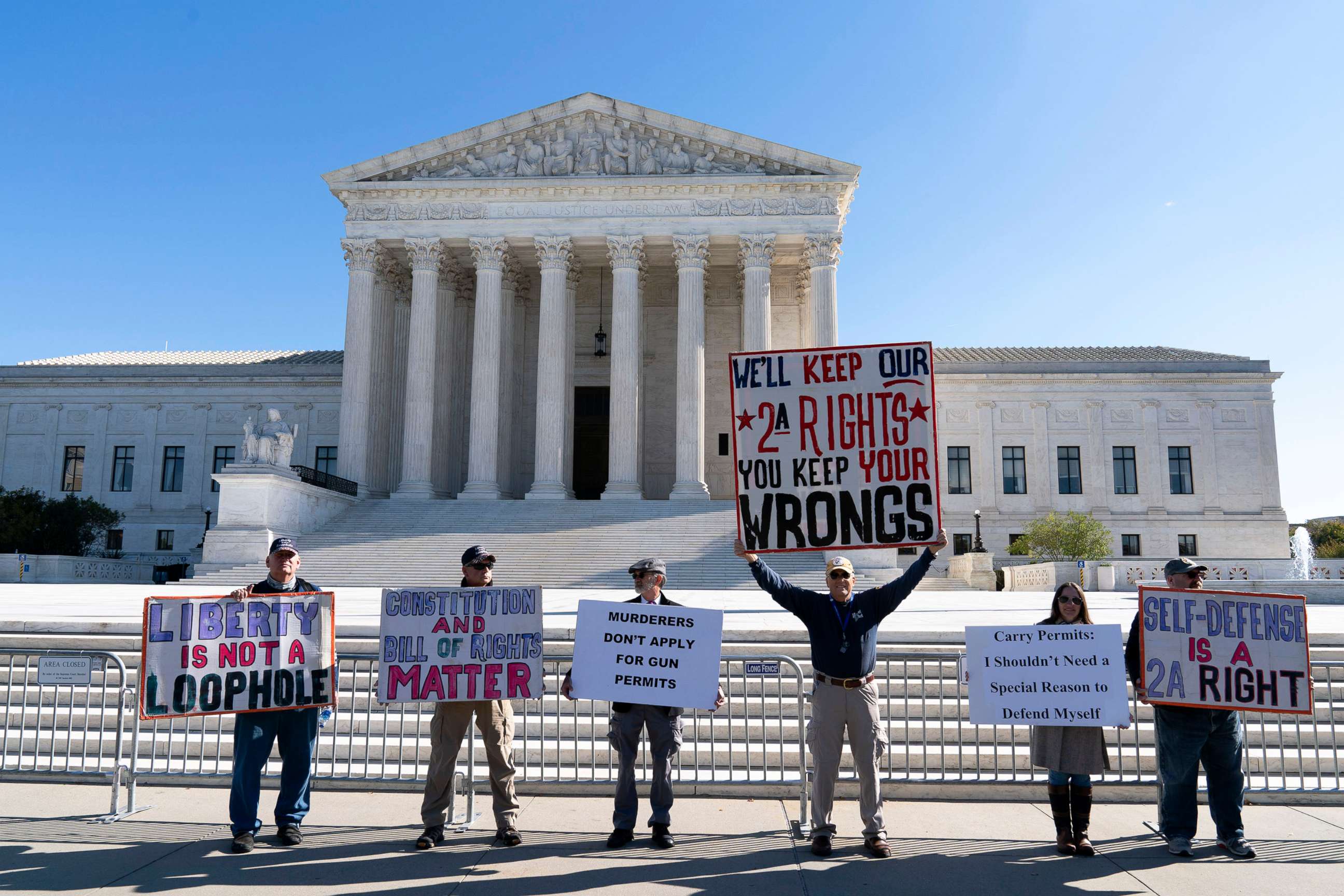
The Supreme Court’s recent ruling on gun rights has sent shockwaves through communities across the nation, reshaping not just legal landscapes but also the daily lives of countless individuals. The decision, which limits certain aspects of firearm regulation, has sparked debates that extend far beyond legal arguments into the realms of public safety, individual freedoms, and the very notion of justice in a democratic society.
For decades, gun rights have been a contentious issue, deeply entwined with cultural, political, and economic factors. The Supreme Court’s ruling has reignited these discussions, forcing citizens to confront uncomfortable truths about how guns impact their lives—and how they shape the future of justice for many.
A Historical Turning Point
The court’s decision marks a significant shift in the interpretation of Second Amendment rights. By striking down certain restrictions on firearm ownership and possession, the justices have effectively expanded access to guns in ways that were previously unimaginable. This move has been celebrated by gun rights advocates as a victory for individual freedoms, but critics argue that it undermines public safety and exacerbates existing inequalities.
The ruling is not just a legal milestone; it’s a cultural one. It reflects broader trends in American society, where the possession of firearms is often framed as a symbol of freedom and self-defense. Yet, this narrative obscures the reality: access to guns does not guarantee justice—it can perpetuate cycles of violence, particularly in communities already burdened by systemic inequities.
A Tale of Two Americas
The implications of the ruling are felt differently depending on where you live. In rural areas, where gun ownership is often a way of life, the decision may be celebrated as a reaffirmation of personal liberties. But in urban centers, particularly those with high rates of gun violence, the ruling has been met with fear and frustration.
For marginalized communities—Black, Latino, and Native American neighborhoods, among others—the connection between firearms and injustice is all too familiar. These groups have long borne the brunt of gun violence, often without access to the resources needed to protect themselves or their families. The Supreme Court’s ruling, in this context, feels less like a victory for freedom and more like a widening gap between those who can afford to arm themselves and those who cannot.
The Human Cost of Guns
The human toll of gun violence is impossible to ignore. Every year, thousands of lives are lost to related deaths, shattering families and communities in the process. Advocates for gun control argue that stricter regulations could save lives, but opponents counter that such measures infringe on constitutional rights.
The Supreme Court’s ruling has only deepened this divide, with some celebrating it as a triumph of liberty and others decrying it as a step backward for public safety. The truth lies somewhere in between: access to guns is not inherently good or bad—it depends on who holds them and why.
A Call for Balance
The challenge now is to find a middle ground that respects individual freedoms while also safeguarding the rights of communities vulnerable to gun violence. This requires a nuanced approach that acknowledges both the protections afforded by the Second Amendment and the need for common-sense regulations.
Progressive voices must continue to advocate for policies that promote safety without infringing on constitutional rights. This includes stronger background checks, bans on high-capacity weapons, and community-based programs aimed at reducing gun violence.
Ultimately, the Supreme Court’s ruling is a reminder of how deeply intertwined our lives are with the laws that govern them. As we move forward, it’s crucial to ensure that justice is not just a legal concept but a lived reality for everyone—regardless of their zip code or the color of their skin.
About the Author:
Mehdi Hassan is Foreign Correspondent (Middle East) at our publication. A seasoned foreign correspondent with a focus on Middle Eastern affairs, Mehdi brings deep insight into conflict zones and political transitions. His work bridges local narratives with global perspectives.
 Aisha is an award-winning journalist with a focus on cultural narratives and social justice. Her work explores how local traditions intersect with global dynamics.
 A tech enthusiast and data journalism pioneer, Carlos uses innovative storytelling techniques to uncover trends in global technology and its societal impacts.
 With over 15 years of experience in global journalism, Emily has led award-winning investigative teams and set the editorial direction for numerous publications. Her expertise lies in fostering impactful storytelling that connects diverse communities.
 Fatima is a rising star in investigative journalism, with a focus on uncovering stories that affect marginalized communities. Her work spans South Asia and beyond.
 Hina is a multimedia journalist with a focus on migration and displacement. Her work uses visual storytelling to highlight the human side of global movements.
 Luis brings a unique perspective to global health and science reporting, blending scientific expertise with journalistic storytelling.