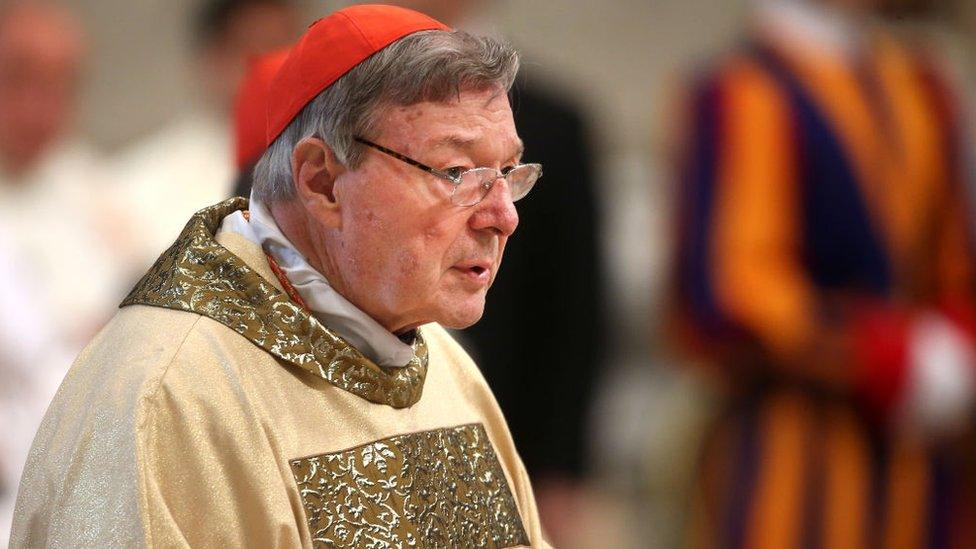
Pells Downfall: Unraveling Power and Truth in the Catholic Church
In the quiet corridors of power within the Catholic Church, few figures have wielded as much influence as Cardinal George Pell. Once seen as a towering figure in the Church’s hierarchy, his downfall has sent shockwaves through not just the Australian religious landscape but the entire world. The case against him, which culminated in his conviction for historic child abuse offenses, has exposed uncomfortable truths about how power intersects with justice—and what happens when systems fail to protect the vulnerable.
The Man Behind the Power
Before his fall from grace, Pell was a man of many firsts. As the highest-ranking Catholic official in Australia, he was a trusted advisor to Pope Francis and played a key role in shaping the Church’s global policies. Known for his forthrightness and unapologetic demeanor, Pell was often seen as a bridge between tradition and modernity within the Church. But beneath this imposing figure lay a web of secrets that would eventually unravel his career—and challenge the very foundations of the institution he served.
The Abuse Scandal Unfolds
In 2018, the Australian Royal Commission into Institutional Responses to Child Sexual Abuse dropped shocking allegations against Pell. Survivors came forward, their stories corroborating each other in ways that left little room for doubt. They described how Pell, then a senior figure in Melbourne’s archdiocese, had exploited his position of trust to abuse young boys over several decades.
The details were harrowing: one survivor recalled being plucked from a swimming pool by Pell, who then forced him into a car and sodomized him. Another spoke of being targeted during church events, with Pell using his authority to isolate and abuse them. These stories painted a grim picture of a man who used his power not to serve God or His people but to satisfy his darkest impulses.
A Fight for Justice in Court
When the case went to trial, it was anything but straightforward. The Church, through its legal team, fought hard to challenge the credibility of the survivors and cast doubt on their accounts. But as more details emerged during the court proceedings, the evidence against Pell became overwhelming. Text messages, corroborating statements from other victims, and even confessions from accomplices painted a clear picture of abuse that spanned decades.
The jury’s conviction was unequivocal: Pell was found guilty on multiple counts of sexual assault involving children. The maximum sentence handed down—six years in prison—was far less than the life sentence sought by prosecutors, but it marked a significant step toward accountability for one of Australia’s most powerful men.
Shaking the Foundations of Power
Pell’s conviction has had ripple effects beyond Australia. It has sparked renewed calls for transparency and accountability within the Catholic Church, which has long been criticized for its handling of abuse scandals. Survivors worldwide have seen his downfall as a rare glimmer of hope—a sign that even those at the highest levels of power can be held to account.
But the battle is far from over. The Church, in many parts of the world, continues to struggle with how to address its past wrongs and prevent future abuses. In some cases, bishops have been slow to implement reforms or reluctant to hand over documents that could expose other abusers. Advocates argue that true justice requires not only legal accountability but also a cultural shift within the Church—one that prioritizes the safety of children over institutional reputation.
Reflections on Change and Accountability
As Pell, the Catholic Church in Australia has faced unprecedented scrutiny. Survivors have been buoyed by his conviction, seeing it as a rare instance where the system worked in their favor. But many remain wary of the broader implications of his fall. Some fear that without sustained pressure, the Church will revert to its old ways.
The case also highlights the enduring power of storytelling—how individual narratives can collectively shape public perception and challenge entrenched systems. For progressive advocates, it underscores the importance of amplifying survivor voices and holding institutions accountable for their failures.
Conclusion
The downfall of Cardinal George Pell is a turning point—not just for the Catholic Church but for anyone who cares about justice and the protection of vulnerable people. It serves as a reminder that even the most powerful among us are not above the law, and that truth, no matter how uncomfortable, must always be told.
As the Church grapples with its legacy of abuse, the hope lies in whether it can truly reform itself. For survivors, this is not just about winning court cases but about reclaiming their dignity and demanding a future where such atrocities are impossible. The road ahead will be long, but the lessons from Pell’s downfall offer a beacon of hope for those seeking justice and truth.
About the Author:
Aisha Ali is Cultural Correspondent at our publication. Aisha is an award-winning journalist with a focus on cultural narratives and social justice. Her work explores how local traditions intersect with global dynamics.
 Aisha is an award-winning journalist with a focus on cultural narratives and social justice. Her work explores how local traditions intersect with global dynamics.
 A tech enthusiast and data journalism pioneer, Carlos uses innovative storytelling techniques to uncover trends in global technology and its societal impacts.
 With over 15 years of experience in global journalism, Emily has led award-winning investigative teams and set the editorial direction for numerous publications. Her expertise lies in fostering impactful storytelling that connects diverse communities.
 Fatima is a rising star in investigative journalism, with a focus on uncovering stories that affect marginalized communities. Her work spans South Asia and beyond.
 Hina is a multimedia journalist with a focus on migration and displacement. Her work uses visual storytelling to highlight the human side of global movements.
 Luis brings a unique perspective to global health and science reporting, blending scientific expertise with journalistic storytelling.