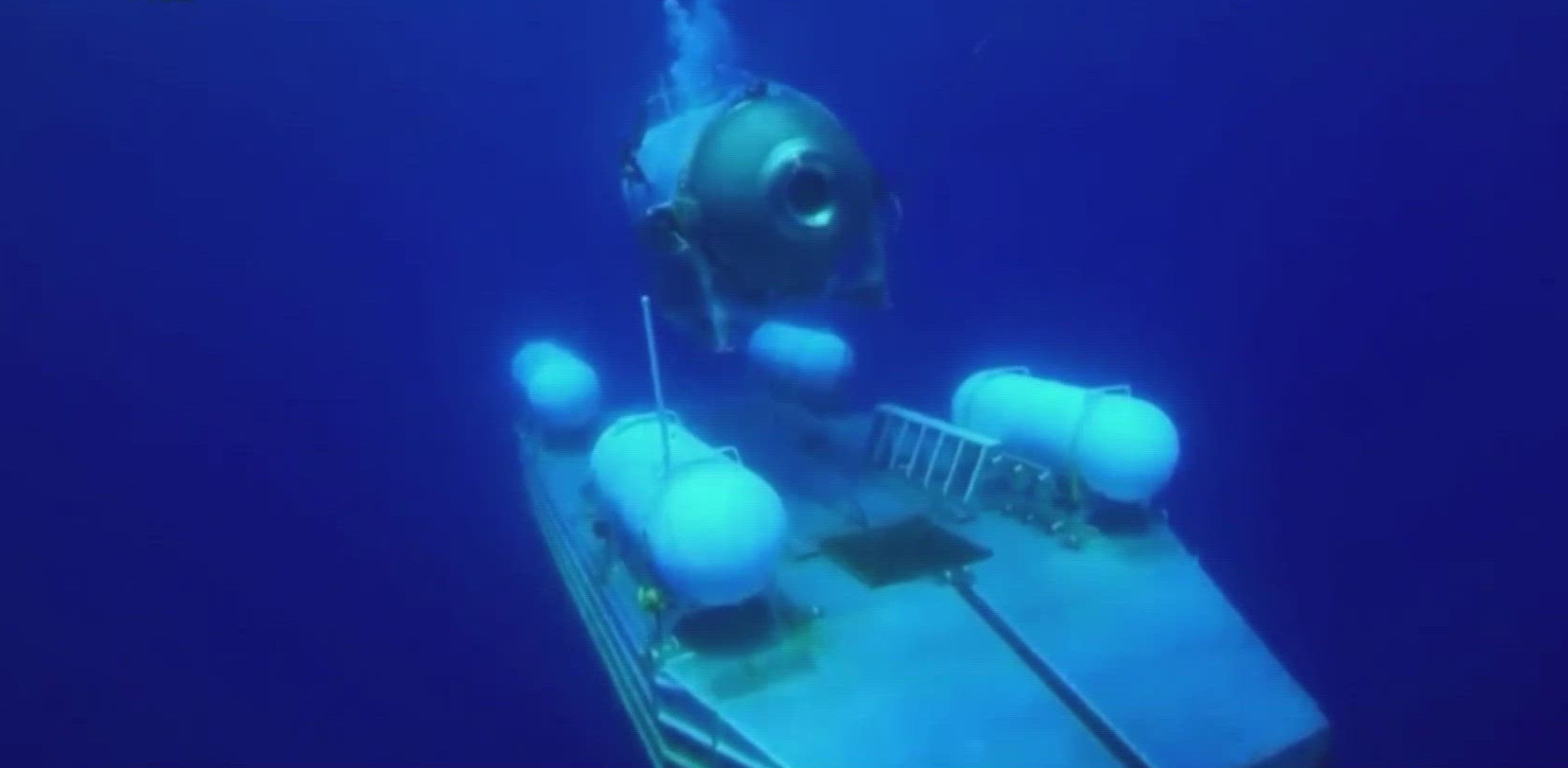
Titanic Submersible Crew Fighting Deadly Risks Beyond Oxygen
The cold, crushing depths of the North Atlantic Ocean hold secrets that have captivated humanity for over a century. Among them lies the wreck of the Titanic, a ship whose legacy has become a symbol of human ambition and tragedy. But beneath the waves, another story unfolds—one of modern-day explorers who brave the unknown to uncover history’s treasures. These are the crew members of submersibles like The Titan, a vessel that shuttles passengers and researchers down to the Titanic’s final resting place, nearly 4,000 meters below the surface.
Yet, as they descend into the abyss, these crew members face risks far greater than just the weight of the ocean pressing against their hulls. Beyond the immediate dangers of submersion—a lack of oxygen, mechanical failure, or entanglement with debris—there lies a silent, invisible threat that lingers long after the mission is complete. This is a story about the human cost of deep-sea exploration, and how those who venture into the depths are now fighting to protect their health and safety in the face of systemic risks.
The Silent Dangers: Beyond Oxygen Deprivation
Descending into the ocean’s abyss is no ordinary feat. At such extreme depths, the body undergoes profound changes. Pressure increases exponentially with every meter, forcing air pockets in the lungs to shrink and bones to compress. But for The Titan’s crew, the physical toll is just the beginning.
One of the lesser-known risks of deep-sea diving is the psychological strain of isolation. For hours on end, crew members are confined within the submersible’s cramped quarters, cut off from human contact except for the voices of their colleagues through a static-filled intercom. “It’s like being in a tiny room with no windows,” said Alex*, a former Titan technician who now advocates for better safety standards. “You’re surrounded by metal and darkness, and your mind starts to play tricks on you.”
The isolation isn’t the only challenge. The constant hum of machinery, the faint creaks as pressure builds, and the ever-present knowledge that one misstep could mean catastrophe create a high-stress environment. Over time, this mental toll can lead to anxiety, depression, and even PTSD. “I didn’t realize how much it would affect me,” said another crew member who prefers to remain anonymous. “It’s like living in a pressure cooker for hours on end.”
But these psychological risks are just part of the story. The real danger lies in the long-term health consequences that many crew members face after returning to the surface. Studies have shown that deep-sea divers are at an increased risk of developing chronic conditions such as hypertension, cardiovascular disease, and even certain types of cancer linked to exposure to underwater radiation and other environmental factors.
A Fight for Recognition: When Safety is Secondary
For years, the crew of The Titan and similar submersibles have worked in relative obscurity, their contributions celebrated while their struggles remain hidden. But as more former crew members come forward with stories of physical and mental health issues, a movement is growing to hold the companies accountable for prioritizing profits over people.
In 2021, after years of working on The Titan, Alex began experiencing severe headaches, fatigue, and memory loss. Initially, doctors dismissed his symptoms as stress-related. But when tests revealed elevated levels of certain chemicals in his bloodstream, they traced it back to the submersible’s outdated life support systems. “They were cutting corners,” Alex said, his voice tinged with anger. “And we were the ones paying the price.”
The Titan’s operators have long faced criticism for not adhering to stricter safety protocols. Critics argue that the focus on maintaining operational costs has led to insufficient training for crew members and inadequate maintenance of equipment. This lack of oversight, combined with the high-stakes nature of deep-sea exploration, has created a dangerous environment where risks are often downplayed in favor of maximizing profits.
In response, advocates like Alex have launched campaigns to raise awareness about the dangers faced by submersible crews. They argue that greater transparency and accountability are needed to ensure that workers are protected from preventable harm. “We’re not asking for special treatment,” he said. “We just want to do our jobs without putting our lives on the line.”
Beyond the Titanic: A Call to Action
The story of The Titan’s crew is not unique. Across industries that operate in extreme environments—whether it’s deep-sea exploration, oil drilling, or even space travel—the risks faced by workers are often overlooked in favor of economic gain. The fight for justice and safety is a broader struggle for dignity and fairness in the workplace.
As we reflect on the centennial anniversary of the Titanic’s sinking, it’s worth remembering that the ship’s legacy is not just one of tragedy but also of resilience. The crew who risk their lives to explore its depths today are modern-day heroes, carrying forward the spirit of exploration while demanding that their contributions be valued and their well-being prioritized.
The road ahead is long, but the growing movement for worker safety in deep-sea operations offers hope. By amplifying the voices of those on the front lines, we can ensure that no one has to choose between their livelihood and their health. The Titanic may lie in eternal rest beneath the waves, but the fight for justice and safety continues above the surface—a testament to the enduring strength of those who dare to venture into the unknown.
About the Author:
Luis Rocha is Science Correspondent at our publication. Luis brings a unique perspective to global health and science reporting, blending scientific expertise with journalistic storytelling.
 Aisha is an award-winning journalist with a focus on cultural narratives and social justice. Her work explores how local traditions intersect with global dynamics.
 A tech enthusiast and data journalism pioneer, Carlos uses innovative storytelling techniques to uncover trends in global technology and its societal impacts.
 With over 15 years of experience in global journalism, Emily has led award-winning investigative teams and set the editorial direction for numerous publications. Her expertise lies in fostering impactful storytelling that connects diverse communities.
 Fatima is a rising star in investigative journalism, with a focus on uncovering stories that affect marginalized communities. Her work spans South Asia and beyond.
 Hina is a multimedia journalist with a focus on migration and displacement. Her work uses visual storytelling to highlight the human side of global movements.
 Luis brings a unique perspective to global health and science reporting, blending scientific expertise with journalistic storytelling.