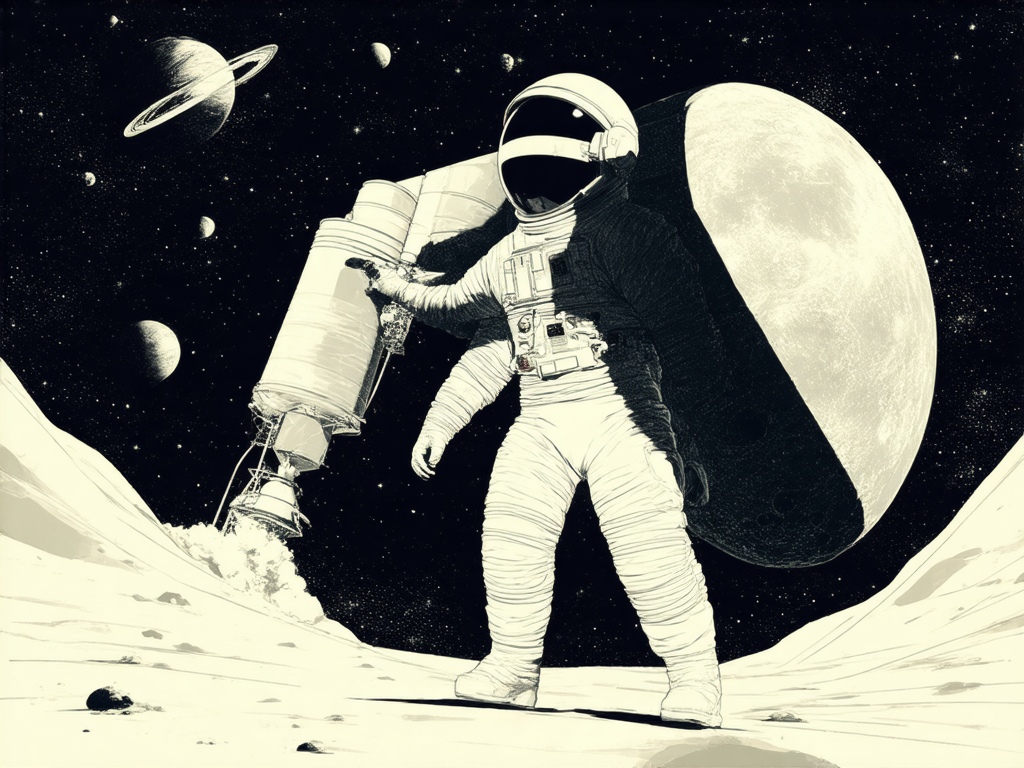
A New Dawn: The Dawn of a Collaborative Space Age
The final frontier has long been a realm of national pride and competition, but recent years have witnessed a paradigm shift in space exploration. A new era is dawning—one where borders are lessened, collaboration is key, and the boundaries of human achievement are redrawn.
This transformation is not merely technological; it is a cultural evolution. Countries once locked in fierce rivalry now share resources, expertise, and vision. Multinational missions, such as the European Space Agency’s cooperation with NASA and Roscosmos on projects like Mars exploration, exemplify this shift. But beyond government partnerships, private companies are rewriting the rules of space travel, making it more accessible than ever before.
The rise of commercial spaceflight has democratized access to space, offering opportunities for individuals and nations that once seemed impossible. Companies like SpaceX have lowered the cost barrier, enabling smaller countries and even private citizens to participate in space exploration. This shift is not just about rockets and satellites—it’s about redefining who gets to contribute to, and benefit from, humanity’s cosmic endeavors.
Yet, this new era is not without challenges. The race for resources on the Moon and Mars has raised questions about sustainability and equity. How will we ensure that space exploration benefits all of humanity, rather than a select few? Balancing profit with preservation, and competition with cooperation, will be crucial in shaping a future where space remains a shared frontier.
As we step into this new chapter, the possibilities are vast. From colonizing other planets to harnessing space-based solar energy for Earth’s benefit, the potential is limitless. But realizing these aspirations requires more than innovation—it demands vision, collaboration, and a commitment to equity.
In this era of breaking barriers, the focus must be on fostering inclusivity and sustainability. By embracing diversity in astronaut teams and prioritizing equitable access to space technologies, we can ensure that space exploration reflects the best of what humanity can achieve together.
The journey has just begun, but the promise of a new era in space exploration is clearer than ever. With unity, ingenuity, and determination, we are poised to unlock the full potential of the cosmos—not for one nation or one company, but for all of humanity.
About the Author:
Luis Rocha is Science Correspondent at our publication. Luis brings a unique perspective to global health and science reporting, blending scientific expertise with journalistic storytelling.
 Aisha is an award-winning journalist with a focus on cultural narratives and social justice. Her work explores how local traditions intersect with global dynamics.
 A tech enthusiast and data journalism pioneer, Carlos uses innovative storytelling techniques to uncover trends in global technology and its societal impacts.
 With over 15 years of experience in global journalism, Emily has led award-winning investigative teams and set the editorial direction for numerous publications. Her expertise lies in fostering impactful storytelling that connects diverse communities.
 Fatima is a rising star in investigative journalism, with a focus on uncovering stories that affect marginalized communities. Her work spans South Asia and beyond.
 Hina is a multimedia journalist with a focus on migration and displacement. Her work uses visual storytelling to highlight the human side of global movements.
 Luis brings a unique perspective to global health and science reporting, blending scientific expertise with journalistic storytelling.