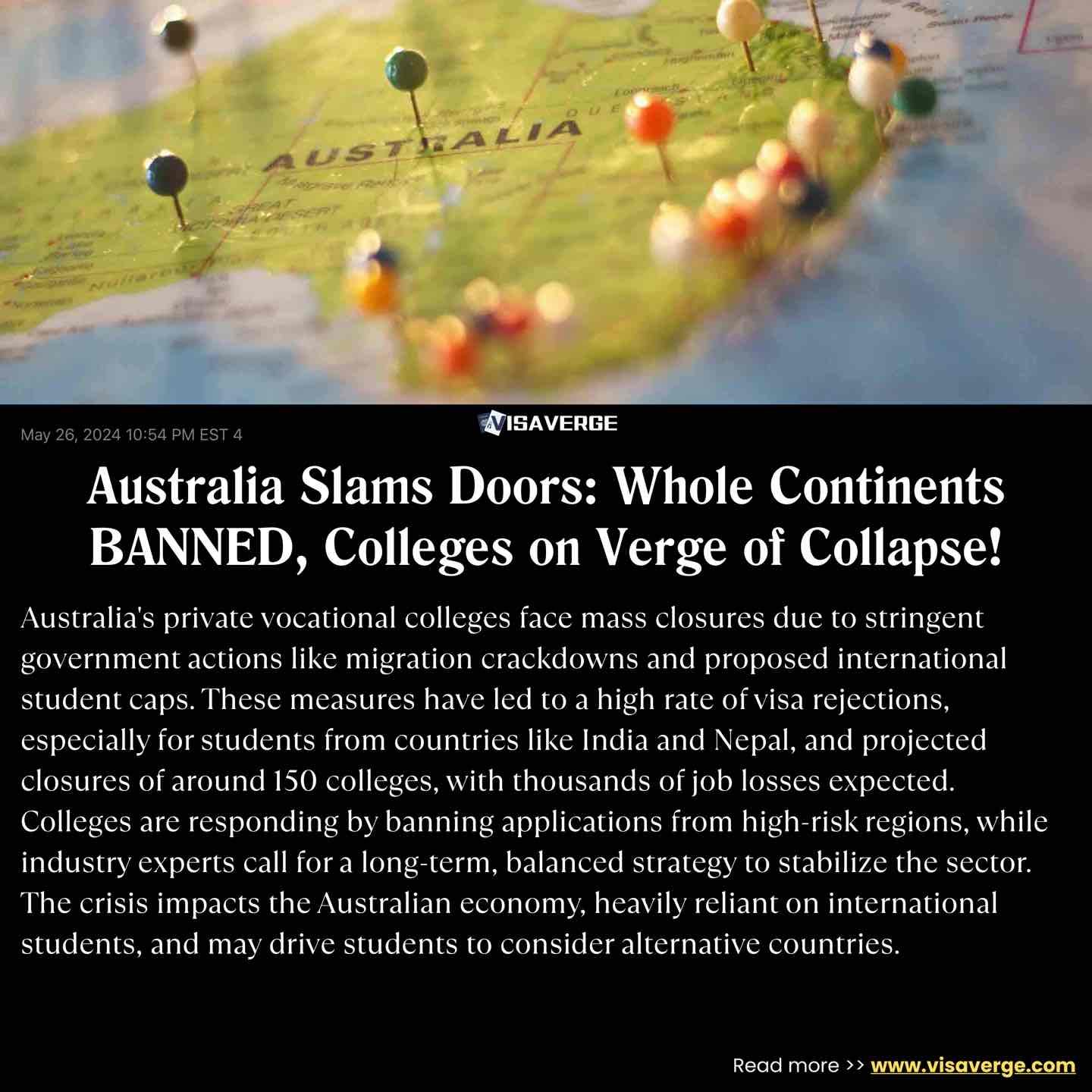
A Door That Closes: The Australian Government’s Hard-Line Stance on International Students
In a move that has left many scratching their heads—and not just metaphorically—Australia’s government has taken a decisive step in what appears to be a concerted effort to reduce the number of international students studying within its borders. While some may argue that this is part of a broader strategy to prioritize and streamline the education system, the reality for many international students is one of dashed hopes and closed doors.
The recent announcement to slash the number of student visas by nearly 50% over the next three years has sent shockwaves through the global student community. Universities in Australia have long been a beacon of diversity and inclusion, attracting students from all corners of the world. But now, these institutions face an uncertain future as they brace themselves for a significant reduction in international enrollment numbers.
For Middle Eastern students, this comes at a particularly challenging time. The region has historically sent some of its brightest minds to study abroad, and Australia has been one of their most popular destinations. Yet, the tightening visa policies are not just affecting individual students—they’re reshaping the broader narrative of cultural exchange and academic collaboration that has defined Australian universities for decades.
The government’s rationale for these changes is rooted in a desire to focus on “quality over quantity,” as stated by Education Minister Jason Clare. While this may sound noble, the practical implications are far-reaching. International students contribute billions of dollars to Australia’s economy each year through tuition fees, rent, and spending on goods and services. They also bring with them unique perspectives that enrich campus life and foster innovation in academic research. By turning away these students, Australia risks not only economic loss but also a decline in the very diversity that has made its education system so renowned.
Moreover, this decision is part of a larger trend of nativist policies that have gained traction in recent years—not just in Australia, but globally. The rise of populist movements and growing concerns over immigration have led to a reevaluation of what it means to be a “citizen” or a “student.” For international students, who often navigate a complex web of visa requirements, cultural adaptation, and financial pressures, such policies can feel like an unwelcome rejection of their aspirations.
Middle Eastern students, in particular, face additional layers of complexity. Many come from countries where access to quality education is limited, making Australia’s universities a lifeline. For some, these institutions represent the only opportunity to pursue their academic goals and build a future that feels out of reach at home. To shut this door on them is not just an administrative decision—it’s a moral one.
As we consider the broader implications of these policies, it’s worth reflecting on what kind of society we want to build. Do we value diversity, inclusion, and the exchange of ideas? Or are we willing to sacrifice these principles for short-term gains? The answers to these questions will shape not just Australia’s future, but the global community as well.
For now, international students continue to navigate a landscape that feels increasingly uncertain. Their stories—of hope, resilience, and determination—are a testament to the power of education to transcend borders. But with each closed door, that vision becomes a little harder to achieve.
About the Author:
Mehdi Hassan is Foreign Correspondent (Middle East) at our publication. A seasoned foreign correspondent with a focus on Middle Eastern affairs, Mehdi brings deep insight into conflict zones and political transitions. His work bridges local narratives with global perspectives.
 Aisha is an award-winning journalist with a focus on cultural narratives and social justice. Her work explores how local traditions intersect with global dynamics.
 A tech enthusiast and data journalism pioneer, Carlos uses innovative storytelling techniques to uncover trends in global technology and its societal impacts.
 With over 15 years of experience in global journalism, Emily has led award-winning investigative teams and set the editorial direction for numerous publications. Her expertise lies in fostering impactful storytelling that connects diverse communities.
 Fatima is a rising star in investigative journalism, with a focus on uncovering stories that affect marginalized communities. Her work spans South Asia and beyond.
 Hina is a multimedia journalist with a focus on migration and displacement. Her work uses visual storytelling to highlight the human side of global movements.
 Luis brings a unique perspective to global health and science reporting, blending scientific expertise with journalistic storytelling.