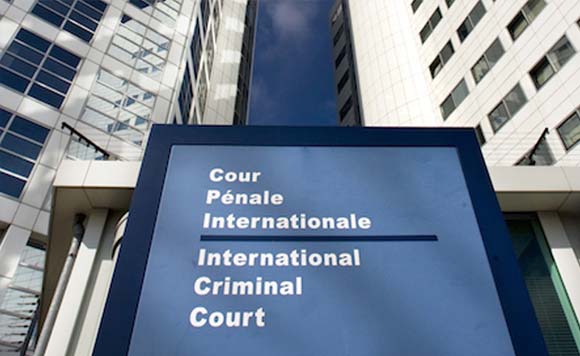
In the bustling streets of Kathmandu, where the Himalayas meet the plains, whispers of accountability have begun to echo through the corridors of power. The International Criminal Court (ICC), long criticized for its opaque processes and perceived bias, has taken a monumental step: it is investigating itself for misconduct. This unprecedented move signals a potential shift in how global justice is delivered—and it could not come at a more critical time for South Asia.
The ICC’s internal probe was triggered by whistleblower allegations detailing systemic corruption, favoritism, and cover-ups within the institution. These claims paint a worrying picture of an organization that has often been accused of failing to hold powerful nations accountable while targeting weaker states. The investigation is currently in its early stages, but the implications for global justice are profound.
For South Asia, where human rights violations are often met with silence or complicity from international bodies, this probe could be a turning point. Countries like Pakistan, India, and Afghanistan have long faced allegations of war crimes, extrajudicial killings, and other atrocities. The ICC’s willingness to examine its own practices may pave the way for more credible adjudication in regions where marginalized communities are often left voiceless.
But the road ahead is fraught with challenges. Activists warn that self-investigations often lack transparency and independence. “The ICC must prove that it can reform itself,” said Amina Javed, a human rights lawyer based in Lahore. “If this probe is nothing more than a PR exercise, it will further erode trust in the institution.”
Javed’s concerns are not unfounded. The ICC has faced accusations of prioritizing political expediency over justice. For instance, its 2013 decision to drop charges against Sudanese president Omar al-Bashir, despite evidence of genocide in Darfur, was widely condemned. Similarly, its failure to address crimes committed by powerful nations like the United States and Israel has led many to question its impartiality.
Yet, the current investigation offers a glimmer of hope. If successful, it could set a precedent for greater accountability within international institutions—a move that would resonate deeply in South Asia. “This is an opportunity for the ICC to reclaim its mandate,” said Ravi Fernando, a journalist and corruption watchdog in Colombo. “But it must act swiftly and without fear of retribution.”
The probe has already sparked debates across the region. In New Delhi, activists are calling for greater scrutiny of India’s role in international justice frameworks. The country, which has often been criticized for its treatment of minorities and political dissidents, could face new pressure to address human rights abuses under international law.
Meanwhile, in Islamabad, there is cautious optimism about the potential implications for Pakistan. The nation has faced ICC scrutiny over its counterterrorism operations, which have been linked to extrajudicial killings and enforced disappearances. “If the ICC can clean up its act,” said one anonymous source close to the Pakistani government, “it might finally earn the credibility it so desperately needs.”
The stakes are high for the ICC’s internal probe. If it fails to deliver meaningful reforms, it risks becoming further entrenched in its reputation as a tool of global power dynamics. But if it succeeds, it could breathe new life into the pursuit of justice for marginalized communities worldwide.
As the investigation unfolds, one thing is clear: accountability begins at the top. Whether the ICC can truly reform itself—and whether that reform extends to addressing the systemic issues that have plagued its work in South Asia—will determine whether this probe marks a turning point for global justice.
About the Author:
Fatima Khan is Investigative Reporter at our publication. Fatima is a rising star in investigative journalism, with a focus on uncovering stories that affect marginalized communities. Her work spans South Asia and beyond.
 Aisha is an award-winning journalist with a focus on cultural narratives and social justice. Her work explores how local traditions intersect with global dynamics.
 A tech enthusiast and data journalism pioneer, Carlos uses innovative storytelling techniques to uncover trends in global technology and its societal impacts.
 With over 15 years of experience in global journalism, Emily has led award-winning investigative teams and set the editorial direction for numerous publications. Her expertise lies in fostering impactful storytelling that connects diverse communities.
 Fatima is a rising star in investigative journalism, with a focus on uncovering stories that affect marginalized communities. Her work spans South Asia and beyond.
 Hina is a multimedia journalist with a focus on migration and displacement. Her work uses visual storytelling to highlight the human side of global movements.
 Luis brings a unique perspective to global health and science reporting, blending scientific expertise with journalistic storytelling.