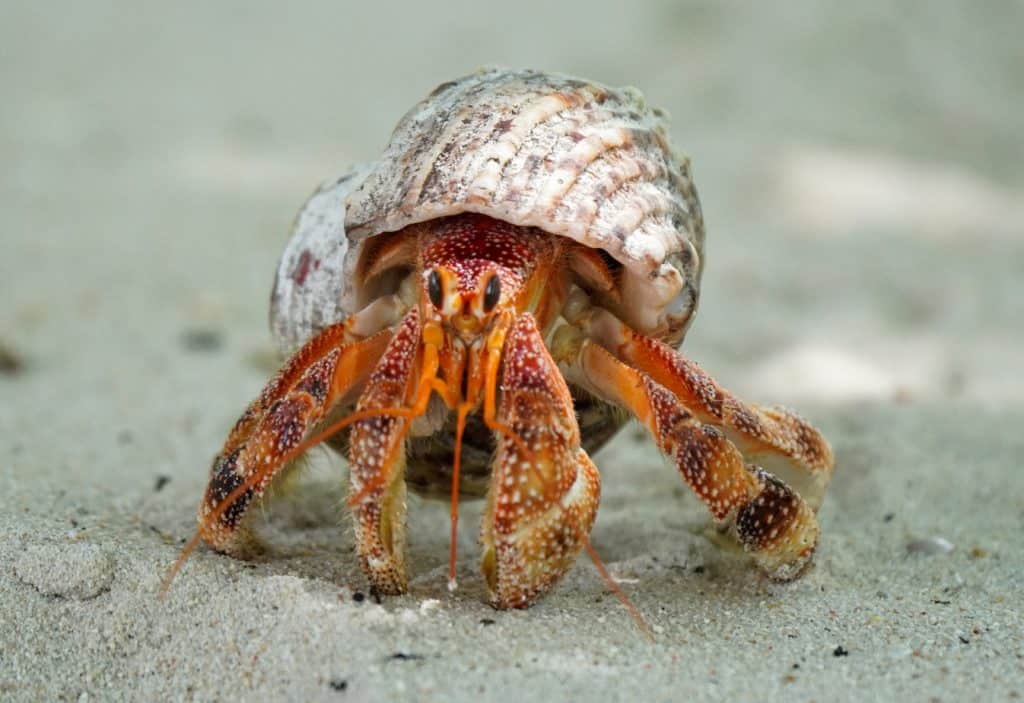
The dim glow of a warehouse illuminated a scene straight out of a wildlife black market: two men, their faces obscured by masks, carefully unpacking crates filled with hermit crabs. The creatures, small but striking in their vibrant shells, were being moved with the precision of smugglers who knew the value of their cargo. It was a routine operation—or so they thought—until authorities intervened.
The arrest of these two individuals marked a significant bust in the growing shadow economy of illegal wildlife trade. But this wasn’t just about a few crabs; it exposed a sprawling network that spans continents and connects some of the most remote corners of the natural world to the lucrative global market for exotic pets.
Hermit crabs, often overlooked compared to more charismatic creatures like tigers or parrots, are quietly becoming a hot commodity in the pet trade. Their unique shells, which they shed and replace throughout their lives, make them particularly sought after by collectors. But the demand doesn’t stop there: hermit crabs play a critical role in marine ecosystems, helping to recycle nutrients and maintain biodiversity. When removed from their natural habitats en masse, as these 160kg of crabs were, it can disrupt entire underwater communities.
This incident is part of a larger trend: the illegal wildlife trade has become a multi-billion-dollar industry, with traffickers exploiting loopholes in international law and preying on vulnerable species. What makes this case particularly alarming is not just the scale but the sophistication of the operation. The smugglers weren’t acting alone; they were part of a larger network that likely extends across multiple countries, with suppliers, middlemen, and buyers all playing their roles in the global black market.
And then there’s the human element. Behind every crate of hermit crabs lies a story of exploitation—of workers toiling under dangerous conditions, of communities stripped of their natural resources, and of ecosystems thrown out of balance. The same networks that traffic wildlife often have ties to other illicit activities, from organized crime to human trafficking, making the fight against illegal wildlife trade a fight for justice as well as conservation.
The crabs themselves are now in the hands of authorities, who will likely reintroduce them to their natural habitats if possible. But this one-time seizure is just a small victory in a much larger war. To truly protect these creatures—and by extension, our planet—we need stronger international cooperation, stricter enforcement of wildlife laws, and greater awareness of the environmental and ethical costs of the exotic pet trade.
In the end, it’s not just about saving hermit crabs; it’s about standing up for the interconnected web of life that sustains us all. Because when we fail to protect one piece of this intricate puzzle, we risk unraveling the whole.
About the Author:
Luis Rocha is Science Correspondent at our publication. Luis brings a unique perspective to global health and science reporting, blending scientific expertise with journalistic storytelling.
 Aisha is an award-winning journalist with a focus on cultural narratives and social justice. Her work explores how local traditions intersect with global dynamics.
 A tech enthusiast and data journalism pioneer, Carlos uses innovative storytelling techniques to uncover trends in global technology and its societal impacts.
 With over 15 years of experience in global journalism, Emily has led award-winning investigative teams and set the editorial direction for numerous publications. Her expertise lies in fostering impactful storytelling that connects diverse communities.
 Fatima is a rising star in investigative journalism, with a focus on uncovering stories that affect marginalized communities. Her work spans South Asia and beyond.
 Hina is a multimedia journalist with a focus on migration and displacement. Her work uses visual storytelling to highlight the human side of global movements.
 Luis brings a unique perspective to global health and science reporting, blending scientific expertise with journalistic storytelling.