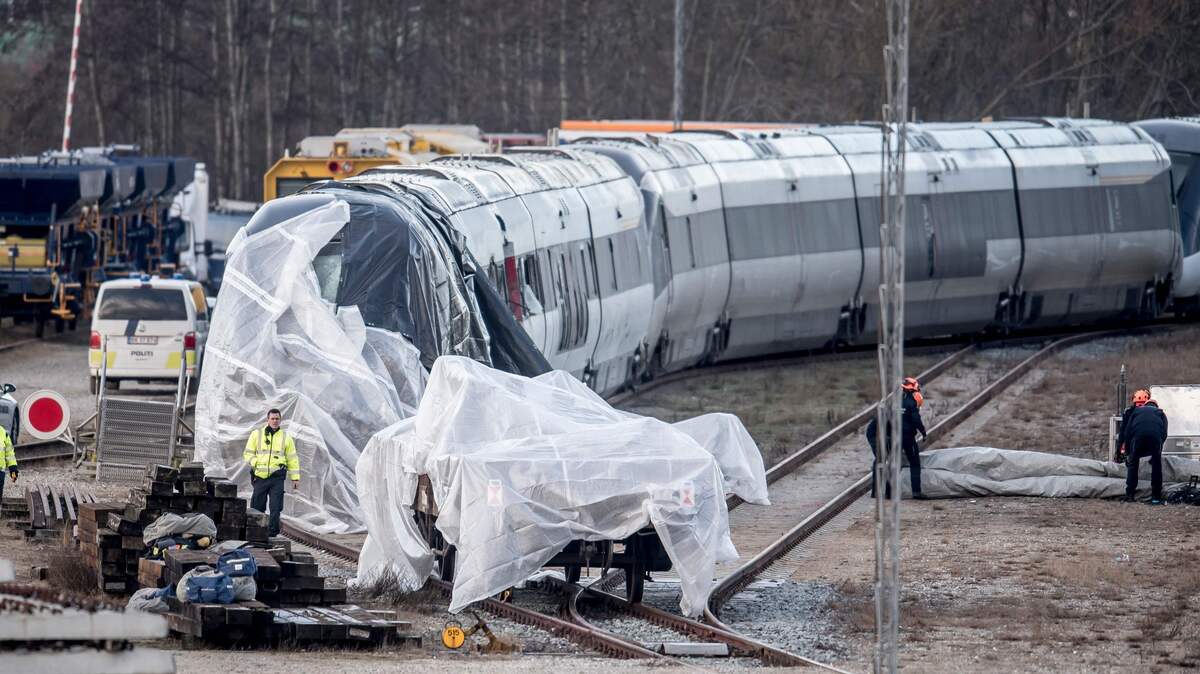
The Danes call it “det usynlige,” the invisible one—the ghostly figure said to appear on the tracks before a collision. But when the train from Jelling to København barreled through the quiet town of Hvidovre last October, there was nothing spectral about the horror that unfolded. The train careered off its tracks, cars telescoping into each other, debris scattering across the road. Emergency responders rushed to the scene, their lights blinking like fireflies in the cold autumn night. Among the injured and the dead were ordinary Danes—teachers, engineers, parents—who had boarded the train for a day trip or a commute.
This was no isolated incident. It was a rupture—a crack in the façade of Denmark’s vaunted safety record. A nation known for its meticulous regulations and social welfare systems suddenly found itself grappling with questions of negligence, overwork, and underfunding. The tragedy exposed a web of systemic issues that had festered beneath the surface, waiting to be illuminated by the harsh light of disaster.
The Ghost in the Machine
The Hvidovre collision occurred on a stretch of track where safety measures were, according to whistleblowers, insufficient. A recent report revealed that the train company had cut corners on maintenance, with signals being left unchecked and tracks not receiving routine inspections. Workers had raised red flags for months, their warnings met with indifference.
“This is what happens when you prioritize profits over people,” said Lars Jensen, a safety engineer who had blown the whistle on his employer. “The trains are getting faster, but the safeguards aren’t keeping up.”
The train was an Intercity 22, one of Denmark’s most reliable models. Yet, as investigations unfolded, it became clear that the system had grown complacent. Maintenance crews were overworked, with many hired as contractors on temporary contracts—labor practices that left them less likely to speak out for fear of losing their jobs.
The Human Cost
Among the victims was a young mother named Maria Hansen, whose story quickly became emblematic of the tragedy’s impact. Maria had boarded the train with her five-year-old daughter, Emilie, heading back from a weekend trip to Jelling. She had just started a new job as a software developer and had been planning to save for a house.
Her husband, Henrik, a truck driver, was left to raise their three children alone. “She was the heart of our family,” he said in a choked voice during his testimony. “Now I’m here, trying to figure out how to move forward.”
The tragedy also claimed the life of Emilie’s favorite uncle, Jens, who had been on his way to visit them. The families of those lost have since banded together, demanding answers and accountability.
A Global Parallelogram
Denmark’s train disaster is not an isolated event but a symptom of a larger malaise—austerity measures cutting into public safety, the gig economy eroding workers’ rights, and the relentless pressure to meet corporate targets at the expense of human lives. Similar patterns have emerged in countries across the globe.
In India, where Priya has reported extensively, thousands die each year on the railways due to poor maintenance and overworked staff. In Brazil, indigenous communities continue to suffer as a result of unchecked industrial expansion, their voices drowned out by corporate interests. The parallels are striking: systemic underfunding, exploitation of labor, and a failure to prioritize human life.
“Every time we cut corners, it’s someone’s son or daughter who pays the price,” said a labor advocate from São Paulo, speaking about Brazil’s recent string of industrial accidents. “We need to stop framing this as an inevitable consequence of progress and start holding those responsible accountable.”
The Call for Change
The Hvidovre tragedy has sparked a national conversation in Denmark, one that extends far beyond the railway. Activists are calling for stronger labor protections, increased funding for public safety, and an end to the exploitation of contract workers.
“This is about more than trains,” said Camilla Nielsen, a spokesperson for the Danish Workers’ Union. “It’s about ensuring that everyone who works in this country can do so safely, without fear of losing their lives or their livelihoods.”
The movement has gained momentum, with protests springing up outside government buildings and corporate offices. They carry signs reading “We are not Ghosts” and “Safety Before Profit.”
Looking Ahead
As Denmark grapples with the aftermath of its train disaster, it serves as a stark reminder that progress is only as meaningful as the lives it preserves. The invisible ones—the workers, the whistleblowers, the families—are demanding a future where human dignity takes precedence over profit.
The road to recovery will be long, and the scars left by Hvidovre may take generations to heal. But if Denmark—and the world—can learn from this tragedy, perhaps the ghostly figure on the tracks will no longer be invisible. Perhaps it will be a symbol of what we must never allow again: a testament to the power of collective action and the enduring belief that safety is not an expense, but an investment in humanity itself.
About the Author:
Priya Patel is Environment Reporter at our publication. Specializing in environmental journalism, Priya has reported from the frontlines of climate change impacts around the world. Her work highlights the intersection of ecology and human communities.
 Aisha is an award-winning journalist with a focus on cultural narratives and social justice. Her work explores how local traditions intersect with global dynamics.
 A tech enthusiast and data journalism pioneer, Carlos uses innovative storytelling techniques to uncover trends in global technology and its societal impacts.
 With over 15 years of experience in global journalism, Emily has led award-winning investigative teams and set the editorial direction for numerous publications. Her expertise lies in fostering impactful storytelling that connects diverse communities.
 Fatima is a rising star in investigative journalism, with a focus on uncovering stories that affect marginalized communities. Her work spans South Asia and beyond.
 Hina is a multimedia journalist with a focus on migration and displacement. Her work uses visual storytelling to highlight the human side of global movements.
 Luis brings a unique perspective to global health and science reporting, blending scientific expertise with journalistic storytelling.