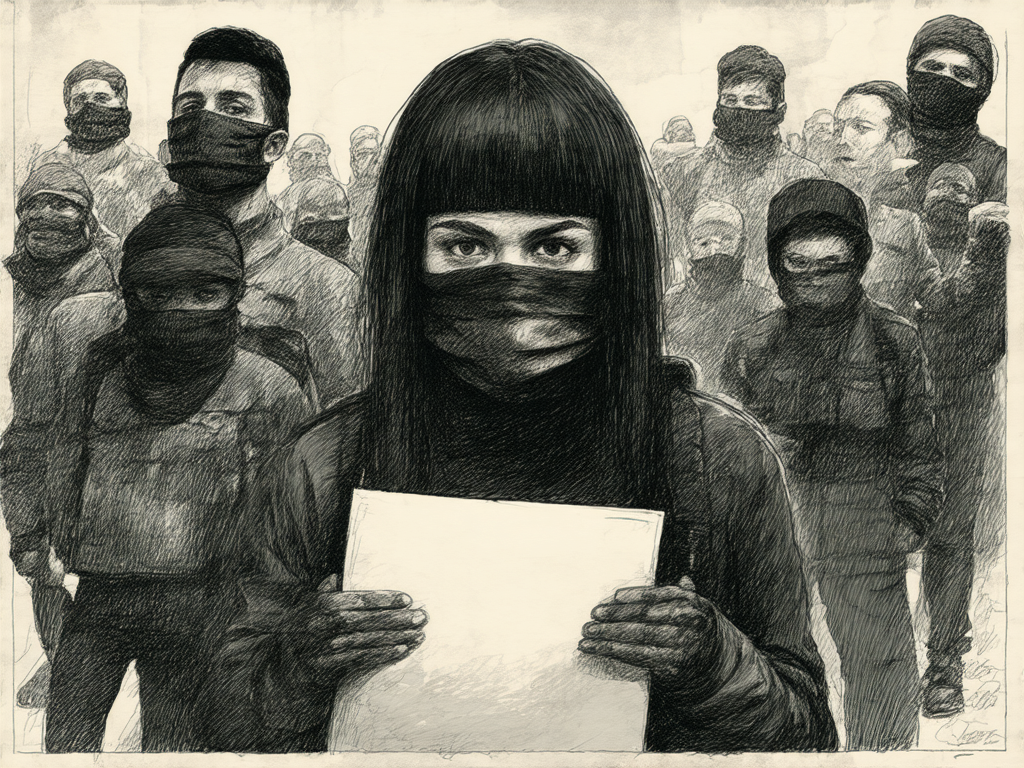
In recent weeks, Twitter has become a battleground for a new kind of digital warfare—a war where words are manipulated, policies are twisted, and silenced voices lose their power to challenge extremism. Far-right groups, long accustomed to using platforms like Twitter to amplify their message, have found a new weapon in the social media giant’s own moderation policies. By exploiting loopholes and gaming the system, they’ve managed to silence those who dare to speak out against extremism—ironically, under the very policies designed to combat hate speech.
The situation is reminiscent of a classic catch-22. Twitter, facing growing pressure from regulators and users to clamp down on harmful content, introduced stricter rules to target hate speech, violence, and glorification of terrorism. But in their haste to enforce these rules, they’ve failed to account for the ways in which these policies could be weaponized by those who seek to stifle dissent. Enter the far-right: a group with both the resources and the motivation to frame anti-extremism voices as threats to national security or public order.
The Far-Right’s Playbook
The far-right has long understood the power of language. They know how to use words to dehumanize, divide, and incite fear. Now, they’ve added another tool to their arsenal: strategic manipulation of Twitter’s policies. By framing anti-extremism advocates as radicals or threats to “Western values,” they’re able to push these individuals to the fringes of public discourse.
One particularly insidious tactic involves the far-right filing thousands of reports against accounts that criticize extremism, terrorism, or hate speech. While Twitter’s algorithms flag such accounts for review, the sheer volume of these reports creates a backlog—and often leads to those accounts being suspended without proper investigation. The result? Anti-extremism voices are silenced under the very policies meant to protect them.
A Dangerous Precedent
The implications of this manipulation extend far beyond Twitter. It sets a dangerous precedent for how platforms handle speech in the digital age. If anti-extremism advocates are silenced, who’s next? Journalists, activists, and ordinary citizens who speak out against hate speech or call for social justice could find themselves targeted by those who seek to control the narrative.
Consider the case of anti-extremism activists in the Middle East and North Africa (MENA). These regions have long grappled with the dual threats of terrorism and authoritarianism. For years, they’ve used Twitter as a platform to challenge extremism and promote progressive values. But now, as the far-right hijacks Twitter’s policies, these activists are finding themselves caught in a web of repression—both from their own governments and from foreign groups who seek to silence them.
The Need for Vigilance
This is not just a problem for Twitter—it’s a challenge for democracy itself. If platforms fail to protect anti-extremism voices, the far-right will continue to use their influence to erode the very principles of free speech and open dialogue that underpin progressive values.
To combat this, we need greater transparency from social media companies. Users deserve to know how their content is being moderated—and why. We also need stronger protections for activists and advocates who challenge extremism. After all, it’s these voices that hold the power to expose hate speech, promote human rights, and build bridges between communities.
Conclusion
The far-right’s hijacking of Twitter’s policies is a warning sign—not just for social media platforms, but for all of us who believe in the power of words to inspire change. As we navigate this new digital landscape, we must remain vigilant: against those who seek to manipulate systems for their own gain, and against those who seek to silence the voices that challenge extremism.
The fight for free speech is not over—it’s just begun. And if we’re to win it, we’ll need to ensure that platforms like Twitter continue to serve as a haven for dialogue, not a tool for repression.
About the Author:
Mehdi Hassan is Foreign Correspondent (Middle East) at our publication. A seasoned foreign correspondent with a focus on Middle Eastern affairs, Mehdi brings deep insight into conflict zones and political transitions. His work bridges local narratives with global perspectives.
 Aisha is an award-winning journalist with a focus on cultural narratives and social justice. Her work explores how local traditions intersect with global dynamics.
 A tech enthusiast and data journalism pioneer, Carlos uses innovative storytelling techniques to uncover trends in global technology and its societal impacts.
 With over 15 years of experience in global journalism, Emily has led award-winning investigative teams and set the editorial direction for numerous publications. Her expertise lies in fostering impactful storytelling that connects diverse communities.
 Fatima is a rising star in investigative journalism, with a focus on uncovering stories that affect marginalized communities. Her work spans South Asia and beyond.
 Hina is a multimedia journalist with a focus on migration and displacement. Her work uses visual storytelling to highlight the human side of global movements.
 Luis brings a unique perspective to global health and science reporting, blending scientific expertise with journalistic storytelling.