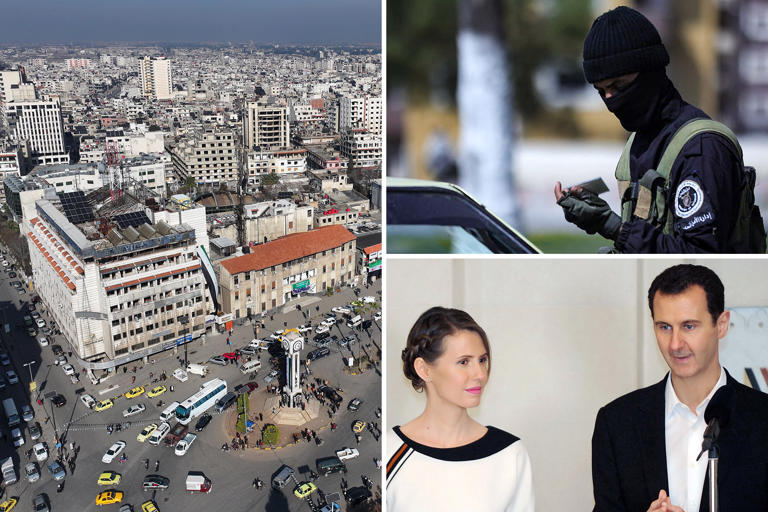
In the quiet yet volatile village of Alawite Stronghold, nestled among the rolling hills of Syria’s coastal mountains, life has long been defined by resilience and the unyielding bonds of community. But on that fateful day, those bonds were tested as the Assad regime unleashed a brutal crackdown, leaving 14 dead in its wake.
The Alawites, a religious minority closely tied to the Assad family and its inner circle, have historically enjoyed a privileged position under the regime. Yet, recent years have seen growing tensions within their own ranks, as many Alawites express disillusionment with the government’s heavy-handed tactics and increasing authoritarianism. The village of Alawite Stronghold, known for its tight-knit community and fierce loyalty to the regime, had long been considered a bastion of Assad support.
But on this particular day, that unwavering loyalty was put to the test. Reports from residents describe a chaotic scene: government forces, equipped with heavy artillery and snipers, launched an unprovoked assault on the village. The reasons for such a crackdown remain unclear, but speculation among local activists points to internal dissent within the Alawite community as a potential trigger.
The death toll of 14—men, women, and children—is a stark reminder of the human cost of Syria’s enduring conflict. Among the victims were several young boys who had reportedly been playing outside their family home when the shelling began. Their mothers, now left to mourn their lost sons, describe the scene with a mixture of grief and anger.
Amid the rubble, local leaders are struggling to piece together what happened. “This is not just about numbers; it’s about lives torn apart,” said one village elder, his voice trembling as he recounted the events. “Our children were taken from us, our families broken. We need answers, but we’re afraid to ask.”
The international community has been slow to respond, with many nations opting to look away as Syria descends further into chaos. Yet, human rights organizations are calling for an independent investigation into the incident, urging governments to hold the Assad regime accountable for its actions.
As night falls on Alawite Stronghold, the village lies in a state of stunned silence. The once vibrant streets are now empty, their collective grief hanging heavy in the air. For those who remain, the road ahead is fraught with uncertainty—a testament to the enduring resilience of a people caught in the crossfire of power and ideology.
In moments like these, it’s easy to feel powerless. But for those willing to listen, the stories from Alawite Stronghold serve as a stark reminder: the cost of silence is far greater than the price of truth.
About the Author:
Luis Rocha is Science Correspondent at our publication. Luis brings a unique perspective to global health and science reporting, blending scientific expertise with journalistic storytelling.
 Aisha is an award-winning journalist with a focus on cultural narratives and social justice. Her work explores how local traditions intersect with global dynamics.
 A tech enthusiast and data journalism pioneer, Carlos uses innovative storytelling techniques to uncover trends in global technology and its societal impacts.
 With over 15 years of experience in global journalism, Emily has led award-winning investigative teams and set the editorial direction for numerous publications. Her expertise lies in fostering impactful storytelling that connects diverse communities.
 Fatima is a rising star in investigative journalism, with a focus on uncovering stories that affect marginalized communities. Her work spans South Asia and beyond.
 Hina is a multimedia journalist with a focus on migration and displacement. Her work uses visual storytelling to highlight the human side of global movements.
 Luis brings a unique perspective to global health and science reporting, blending scientific expertise with journalistic storytelling.